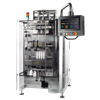
Stick Pack and Sachet Filling and Packaging Machines for liquid products - FFS
Sachet vs Stick Pack Packaging: The Basics Unveiled
Let's clear up the confusion - Choosing between sachet vs stick pack packaging. These seemingly similar formats serve distinct purposes in the single-serve packaging world. Understanding their fundamental differences is crucial for making optimal product packaging decisions that align with your specific requirements.
What is Sachet Packaging? Flat Design and Versatility
Sachet packaging represents one of the most versatile single-serve packaging solutions in today’s market. In my years at SpackMachine, I’ve seen sachets become increasingly popular across multiple industries due to their adaptability and cost-effectiveness.
Key Characteristics of Sachet Packaging
Traditional sachets feature a flat, pillow-like design with four-sided seals. They typically range from 40-80mm in width and 50-100mm in length, offering sufficient surface area for branding. The flat, rectangular shape makes sachets ideal for products requiring a larger surface area-to-volume ratio. From my experience, sachets excel at containing powders, creams, and liquid products between 5-20ml in volume.
What is Stick Pack Packaging? Narrow Shape and Precision
Stick pack packaging evolved as a specialized variant of vertical form-fill-seal technology, addressing the need for more precisely measured single-serve portions. Their unique design offers distinct advantages for certain product categories.
Key Features of Stick Pack Packaging
Stick packs are characterized by their distinctive elongated, narrow design, typically measuring 15-40mm in width and 80-200mm in length. This tube-like format maximizes material efficiency while providing excellent portion control. In my experience implementing packaging solutions, stick packs prove particularly effective for granular products, powders, and liquid concentrates. Their slim profile offers excellent pour control, making them ideal for products requiring precise dispensing.
Core Design Differences: Shape, Size, and Functionality
When clients ask me about what is the difference between sachet and stick pack packaging, I emphasize that it extends beyond mere appearances. Each format has been engineered for specific applications and product types.