
Olive Oil Mills - 30 to 300kg/hr

Olive Oil Mills with Production Speeds of 30kg/hour to 300kg/hour

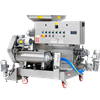
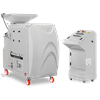
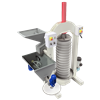
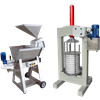
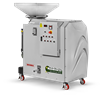
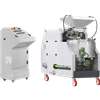
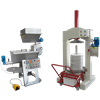
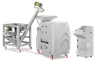
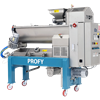
Olive oil mills in the range of 30kg to 300kg per hour are often times for start up operations or proof of concept where the producer is looking for smaller volume and slower production speeds at a lower cost. Zambelli, who produces our smaller batch-type olive oil mills where the olive oil is extracted from the paste with a press, has been producing olive oil processing equipment since 1888.   Kocamaz, Mori-Tem, and OMT who specialize in state of the art boutique "Continuous" Olive Oil Mills that produce incredibly high quality olive oil where a centrifuge extracts the olive oil from the paste in a continuous operation.  Kocamaz and Mori-Tem are the world leaders in design, engineering, and construction of Compact Olive Oil Mills for small to medium volume olive oil production.  
What is the difference between a Continuous Olive Oil Mill compared to Non-Continuous Batch Type Olive Oil Mill?

Continuous olive oil mills use automated centrifugal systems to process olives in a constant flow, improving efficiency, hygiene, and oil quality. Non-continuous batch mills process olives in separate loads using traditional pressing methods, offering artisanal character but lower production efficiency.

Continuous Olive Oil Mill

A continuous mill processes olives in a nonstop automated flow using modern machinery such as hammer crushers, malaxers, decanters, and centrifuges.

How it works:

  • Olives enter continuously
  • They are crushed mechanically
  • Paste moves automatically through malaxation
  • Centrifuges separate oil, water, and solids
  • Olive oil exits continuously during operation

Non-Continuous (Batch) Olive Oil Mill

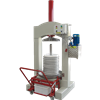
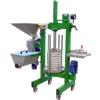
Non-continuous (traditional/batch) mills use presses and mats which are more labor intensive, but is a significantly more affordable way to begin an an operation for producing olive oil. 

How it works:

  • Olives are crushed
  • Olive paste is spread onto mats/discs
  • The paste is pressed mechanically
  • Oil and water are separated afterward
  • The process repeats for the next batch